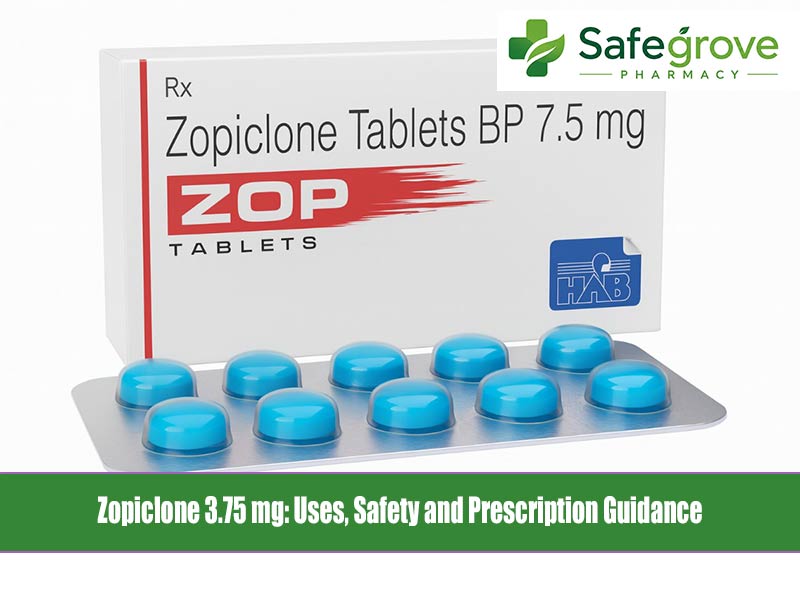
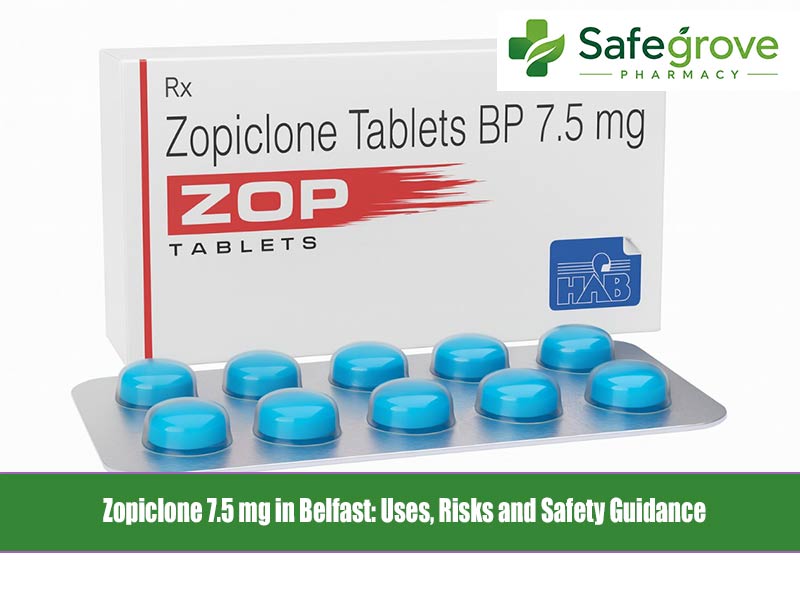
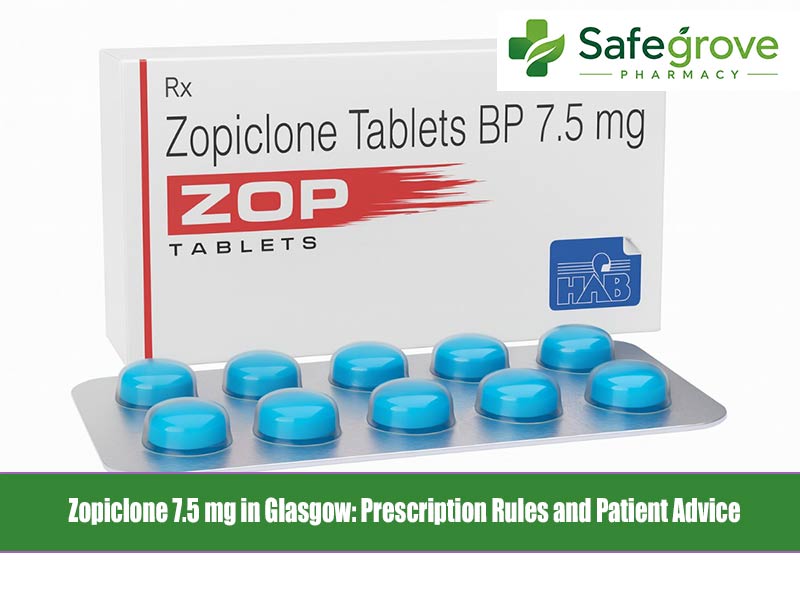
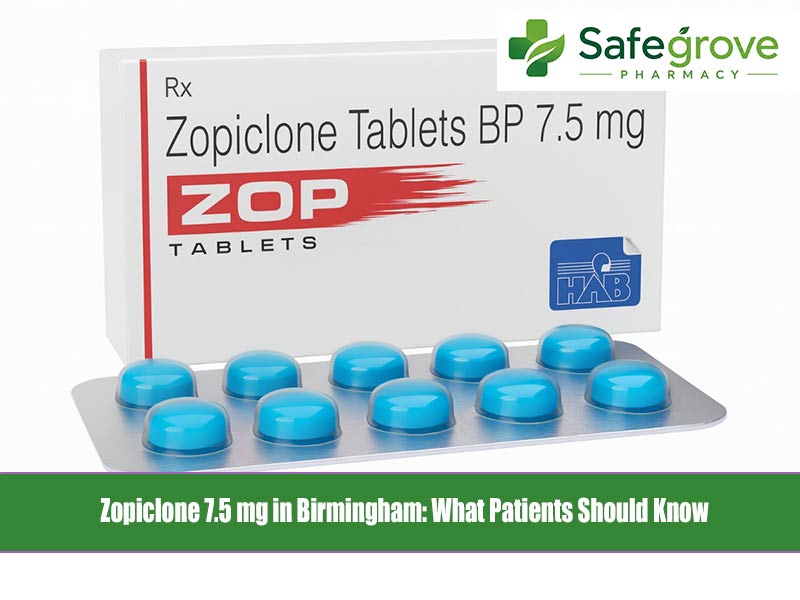
Struggling with persistent sleeplessness can affect every part of daily life, from concentration at work to physical health and emotional resilience. When non-drug approaches such as cognitive behavioural therapy for insomnia (CBT-I) and sleep hygiene changes have not provided enough relief, a UK doctor may occasionally prescribe zopiclone 3.75mg.
Whether you have recently collected a prescription from a local pharmacy in London, Manchester, Edinburgh, Cardiff, or Belfast, or you are researching a family member’s medication, understanding how this medicine works—and how to take it safely—is essential. Because zopiclone is a potent, prescription-only hypnotic medicine and a Class C controlled drug in the UK, strict safety rules govern how long it is taken, who can use it, and what substances must be avoided alongside it.
In this comprehensive guide from Zopiclone Direct UK, we break down the clinical purpose of zopiclone 3.75 mg, how to read the official Patient Information Leaflet (PIL), expected side effects, interaction warnings, and UK prescribing rules.
What Is Zopiclone and What Is Zopiclone 3.75 mg Used For?
Zopiclone belongs to a class of medicines known as non-benzodiazepine hypnotics, commonly referred to as “Z-drugs”. Although its chemical structure differs from traditional benzodiazepines (such as diazepam or temazepam), it acts on similar calming pathways in the brain to induce sleep.
In the United Kingdom, zopiclone is licensed exclusively for the short-term treatment of insomnia in adults aged 18 and over when sleep difficulties are severe, disabling, or causing extreme distress. A GP or specialist prescriber may consider it for specific sleep disturbances, including:
Sleep-onset insomnia: Persistent difficulty falling asleep after going to bed.
Sleep-maintenance insomnia: Waking up repeatedly during the night and struggling to return to sleep.
Early morning waking: Waking significantly earlier than intended and feeling unrefreshed.
Situational or transient insomnia: Acute sleep disruption triggered by temporary severe stress, bereavement, or a sudden change in circumstances.
What Does the 3.75 mg Strength Mean?
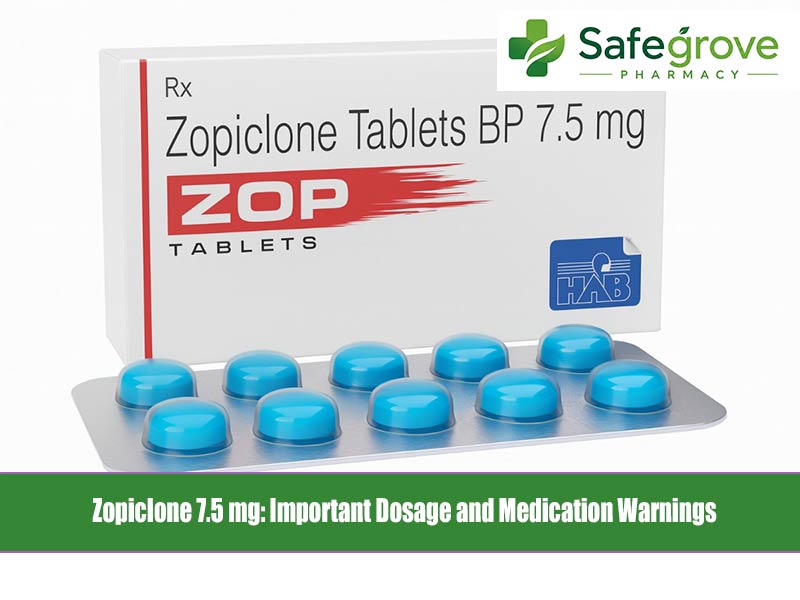
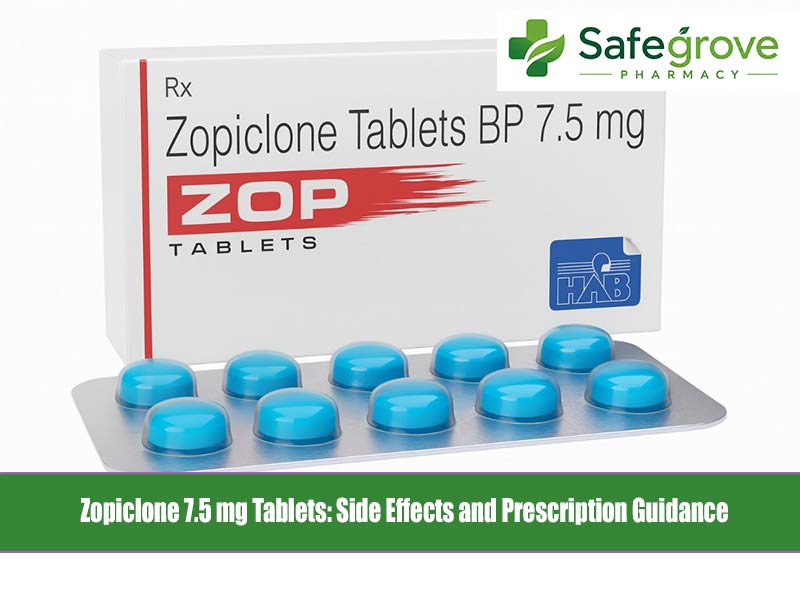
Zopiclone film-coated tablets are manufactured in two standard UK strengths: 3.75 mg and 7.5 mg. The 3.75 mg figure refers to the exact mass of the active ingredient—zopiclone—contained within each tablet.
According to the British National Formulary (BNF) and NHS clinical guidance, 3.75 mg is the lower starting strength. While 7.5 mg is often the standard adult dose, prescribers frequently select the 3.75 mg strength for specific patient groups who process medicines more slowly or are more sensitive to sedative effects. These groups commonly include:
Older adults (typically aged 65 and over): Ageing alters liver metabolism and increases sensitivity to central nervous system depressants, raising the risk of night-time falls and morning confusion.
Patients with liver (hepatic) impairment: Because zopiclone is broken down primarily by the liver, reduced liver function causes the medicine to remain in the body longer.
Patients with kidney (renal) impairment: Although zopiclone does not heavily accumulate in kidney disease, a cautious 3.75 mg starting dose is standard UK practice.
Patients with chronic mild-to-moderate breathing difficulties: Lower doses reduce the risk of nighttime respiratory suppression.
Clinical note: Having a 3.75 mg tablet does not mean that strength is automatically appropriate for every individual. Your prescriber determines your starting strength based on your age, medical history, liver and kidney function, and concurrent medications.
Zopiclone works by enhancing the activity of gamma-aminobutyric acid (GABA), the primary inhibitory (calming) neurotransmitter in the human brain. By binding to specific sites on the $\text{GABA}_\text{A}$ receptor complex, zopiclone amplifies GABA’s natural calming signals, slowing down overactive nerve firing, reducing the time it takes to fall asleep (sleep latency), and decreasing nighttime awakenings.
Onset and Duration of Action
How quickly it works: According to NHS medicines guidance, zopiclone takes approximately 30 to 60 minutes to start working. Because of this rapid onset, it must only be swallowed immediately before you are ready to get into bed and turn out the lights.
How long it stays in your system:Zopiclone has an average elimination half-life of roughly 5 hours in healthy younger adults, though this can extend to 7 hours or longer in older adults or those with reduced liver function. Even after the primary sleep-inducing effect wears off, residual levels remain in the bloodstream the following morning—which is why strict 12-hour driving and machinery precautions apply.
Understanding the Zopiclone 3.75 mg Patient Information Leaflet (PIL)
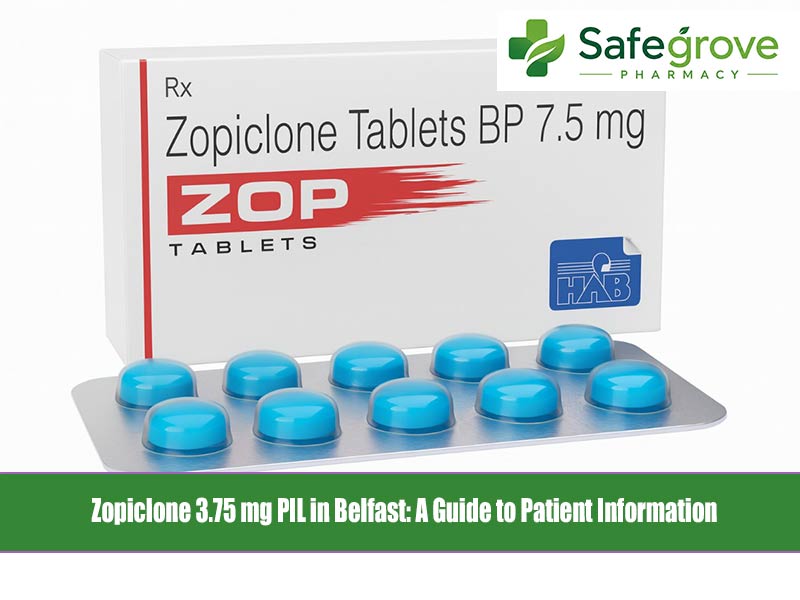
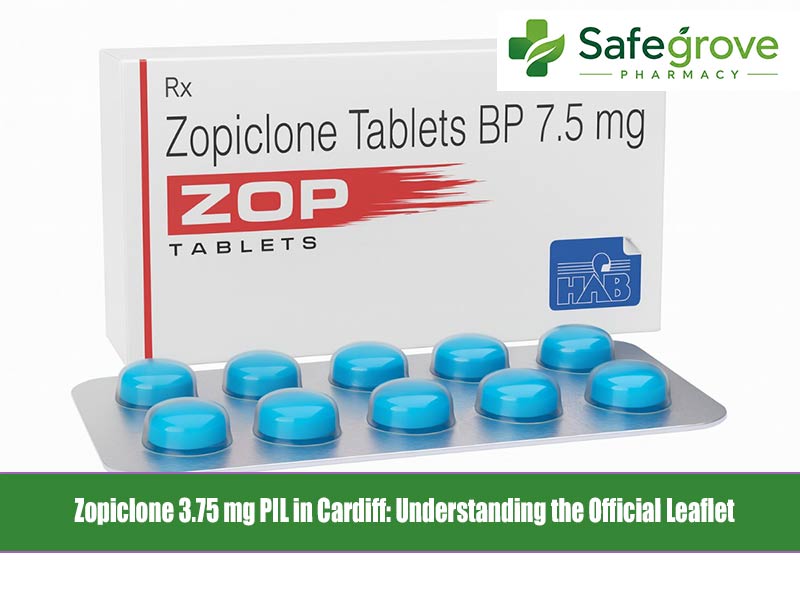
Every box of zopiclone 3.75 mg dispensed in the UK includes an official Patient Information Leaflet (PIL) approved by the Medicines and Healthcare products Regulatory Agency (MHRA). Reading this document before taking your first tablet ensures you understand the exact formulation and safety warnings for your specific brand.
What the PIL Covers
What the medicine is and what it is used for: Confirms the active substance (3.75 mg zopiclone) and its short-term insomnia indication.
Contraindications and warnings: Lists conditions where zopiclone must not be taken (such as myasthenia gravis, severe sleep apnoea, severe liver failure, or respiratory failure).
Dosage and administration instructions: Explains how to swallow the tablet whole with water and warns against crushing, chewing, or taking a second tablet during the same night.
Storage and pack contents: Details storage temperature requirements and lists inactive ingredients (excipients)—for example, most generic zopiclone 3.75 mg tablets contain lactose monohydrate, which is vital information for patients with severe galactose intolerance or lactase deficiency.
Where to Find Verified UK Medicine Guidance
If you misplace the paper leaflet inside your medication carton, you can access verified, up-to-date UK regulatory documents online:
Electronic Medicines Compendium (emc): Hosts current MHRA-approved Patient Information Leaflets (PILs) and Summaries of Product Characteristics (SmPCs) for UK manufacturers (such as Flamingo Pharma, Accord Healthcare, and Sanofi).
MHRA Products Website: Allows you to search by product name or PL (Product Licence) number printed on your tablet strip.
How to Take Zopiclone 3.75 mg Safely
To minimise side effects and ensure safe overnight sedation, follow your prescriber’s instructions and standard UK dispensing guidance:
Take only at bedtime: Swallow your tablet just before going to sleep. Never take zopiclone earlier in the evening while still active, cooking, or driving.
Ensure a full night’s sleep window: Only take zopiclone if you have 7 to 8 hours available for uninterrupted sleep before you need to wake up and function. Waking up too early increases the risk of severe grogginess and temporary memory gaps.
Swallow whole with water: Do not crush, split, or chew the film-coated tablet unless a specific scored tablet and your prescriber explicitly instruct otherwise.
Never take a second dose the same night: If you wake up in the middle of the night, do not take another tablet.
Missed dose rule: If you forget to take your dose at bedtime, skip it completely and wait until the following night. Never double up.
Side Effects of Zopiclone 3.75 mg: Common vs. Serious Warnings
Like all prescription medicines, zopiclone can cause side effects, although not everyone experiences them. Lower strengths like 3.75 mg generally carry a lower risk of intense next-day sedation than 7.5 mg, but vigilance remains important.
Common Side Effects (Affecting up to 1 in 10 people)
Bitter or metallic taste (dysgeusia): The most frequently reported side effect of zopiclone. It is harmless and usually fades as the medicine clears from your body, though sipping water can help.
Dry mouth: Staying hydrated during the day can relieve mild overnight dryness.
Next-day drowsiness or fatigue: Feeling sleepy, lightheaded, or less alert the following morning.
Uncommon and Rare Side Effects
Uncommon (up to 1 in 100): Dizziness, headache, nausea, vomiting, agitation, or vivid nightmares.
Rare (up to 1 in 1,000): Anterograde amnesia (difficulty remembering events that happened after taking the tablet, particularly if sleep was interrupted), confusion, irritability, skin rash, or itching.
Serious Warning Signs (Seek Urgent Medical Help)
Stop taking the medicine and contact NHS 111, your GP, or 999 immediately if you or someone around you notices:
Complex sleep behaviours (parasomnias): Sleepwalking, preparing or eating food, making phone calls, or driving while not fully awake, with no memory of the event the next day.
Breathing difficulties: Shallow, slow, or laboured breathing.
Severe allergic reaction (anaphylaxis): Swelling of the face, lips, tongue, or throat, difficulty swallowing, or a sudden raised, itchy rash.
Psychiatric changes: Hallucinations (seeing or hearing things that are not real), delusions, severe confusion, uncharacteristic aggression, worsening depression, or thoughts of self-harm.
Suspected side effects can also be reported directly to the MHRA via the UK Yellow Card Scheme.
Critical Safety Precautions: Alcohol, Driving and Interactions
1. Strict Avoidance of Alcohol
You must not drink alcohol while taking zopiclone. Both alcohol and zopiclone depress the central nervous system. Combining them dramatically amplifies sedation, impairs coordination, increases the risk of sleepwalking, and can cause dangerously slow breathing (respiratory depression) or difficulty waking.
2. Driving and Machinery (The 12-Hour Rule)
Under UK law (Section 4 and Section 5A of the Road Traffic Act 1988), it is a criminal offence to drive if your ability is impaired by a prescription medicine.
Do not drive, ride a bicycle, or operate heavy machinery for at least 12 hours after taking zopiclone.
Even after 12 hours have passed, do not drive if you still feel drowsy, dizzy, or less alert.
3. Medicine Interactions
Always inform your doctor or pharmacist about every medicine, herbal remedy, or supplement you take before starting zopiclone. Key interactions include:
Slows the liver’s breakdown of zopiclone, increasing blood levels by up to 80% and intensifying side effects.
CYP3A4 Enzyme Inducers
Rifampicin, carbamazepine, phenytoin, St John’s Wort
Speeds up zopiclone clearance, making the sleeping tablet less effective.
Tolerance, Dependence and Safe Withdrawal
One of the most important safety considerations highlighted on every UK zopiclone pack is the risk of tolerance, physical dependence, and withdrawal.
Why treatment is short-term: UK clinical guidelines (including NICE TA77 and BNF recommendations) state that zopiclone should be prescribed at the lowest effective dose for the shortest possible duration—typically from a few days up to 2 weeks, and never exceeding 4 weeks (including any tapering period).
Developing tolerance: If taken continuously for several weeks, the brain adapts to zopiclone, meaning the 3.75 mg dose may gradually feel less effective. Never increase your dose or take an extra tablet if this happens; speak to your GP instead.
Rebound insomnia and withdrawal: Stopping zopiclone abruptly after regular use can trigger rebound insomnia (where sleep temporarily becomes worse than before treatment) alongside withdrawal symptoms such as anxiety, restlessness, irritability, sweating, headaches, tremors, palpitations, and heightened sensitivity to light or noise.
Gradual tapering: If you have been taking zopiclone regularly for more than a week or two, your GP will design a personalised, gradual dose-reduction schedule to help your body readjust safely.
Zopiclone 3.75 mg vs. Zopiclone 7.5 mg: Key Differences
Patients often ask how the two UK tablet strengths compare. Neither strength is “better”—each serves a specific clinical purpose determined by your prescriber.
Feature
Zopiclone 3.75 mg Tablets
Zopiclone 7.5 mg Tablets
Active Ingredient Amount
3.75 mg of zopiclone per film-coated tablet
7.5 mg of zopiclone per film-coated tablet (double the 3.75 mg dose)
Typical UK Prescribing Role
Recommended starting dose for older adults (65+), and patients with liver, kidney, or mild respiratory impairment
Standard adult starting dose for short-term severe insomnia
Sedative Intensity
Milder central nervous system sedation
Stronger hypnotic effect
Next-Day Hangover Risk
Lower likelihood of residual morning drowsiness and falls
Higher potential for morning grogginess, especially if sleep is under 7–8 hours
UK Legal Classification
Prescription-Only Medicine (POM) & Class C Controlled Drug (Schedule 4 Part I)
Prescription-Only Medicine (POM) & Class C Controlled Drug (Schedule 4 Part I)
Never alter your prescribed dose or split tablets without explicit instruction from your GP or pharmacist.
What to Do If Side Effects Occur or Zopiclone Does Not Work
If you find that zopiclone 3.75 mg is not helping you sleep, or if you experience troublesome side effects:
Do not take an extra tablet: Taking two 3.75 mg tablets without medical approval doubles your dose to 7.5 mg, increasing the risk of next-day impairment, memory loss, and overdose.
Do not combine with over-the-counter sleep aids: Avoid adding herbal sleep remedies (like valerian) or pharmacy antihistamines (like Nytol/diphenhydramine) without speaking to a pharmacist first.
Contact your GP or pharmacist: A pharmacist at Zopiclone Direct UK or your local GP surgery can review how and when you are taking the tablet (for instance, taking it too soon after a heavy meal can delay onset) and advise whether a clinical review is needed.
Explore long-term sleep therapies: Because sleeping tablets only manage symptoms temporarily, ask your GP about CBT-I (Cognitive Behavioural Therapy for Insomnia)—the NHS-recommended first-line treatment for lasting sleep recovery.
UK Prescription Rules and Pharmacy Guidance
In the United Kingdom, zopiclone 3.75 mg cannot be purchased over the counter. It is regulated as both a Prescription-Only Medicine (POM) and a Schedule 4 (Part I) Class C Controlled Drug under the Misuse of Drugs Regulations 2001.
Valid UK Prescription Required: You must be assessed by a GMC-registered doctor or qualified independent prescriber before a UK pharmacy can legally dispense zopiclone.
28-Day Validity Rule: Under UK controlled drug regulations, prescriptions for Schedule 4 medicines like zopiclone are valid for 28 days from the date signed by the prescriber.
Never Share Medication: It is illegal and medically dangerous to give your prescribed zopiclone tablets to anyone else, even if they experience similar sleep problems.
If you have questions about an existing zopiclone prescription, medicine interactions, or safe disposal of unused tablets, our UK pharmacy team at Zopiclone Direct UK is here to provide confidential, evidence-based guidance.
Frequently Asked Questions
1. What is zopiclone 3.75 mg prescribed for in the UK?
Zopiclone 3.75 mg is prescribed in the UK for the short-term treatment of severe insomnia in adults. Doctors commonly prescribe the 3.75 mg strength as a cautious starting dose for older adults (aged 65 and over) and patients with liver, kidney, or mild breathing conditions.
2. How long does zopiclone 3.75 mg take to work?
Zopiclone 3.75 mg typically starts working within 30 to 60 minutes of swallowing the tablet. You should take it immediately before going to bed and ensure you have 7 to 8 hours available for uninterrupted sleep.
3. Can I buy zopiclone 3.75 mg over the counter in the UK?
No. Zopiclone 3.75 mg is a Prescription-Only Medicine (POM) and a Class C controlled drug in the UK. It can only be legally supplied by a registered UK pharmacy against a valid prescription from an authorised prescriber.
4. What is the difference between zopiclone 3.75 mg and 7.5 mg?
The difference lies in the amount of active ingredient per tablet. Zopiclone 3.75 mg is half the strength of the standard 7.5 mg adult dose and is typically prescribed to reduce the risk of next-day drowsiness, confusion, and falls in older adults or those with slower liver metabolism.
5. What are the most common side effects of zopiclone 3.75 mg?
The most common side effects are a bitter or metallic taste in the mouth, dry mouth, and feeling drowsy, tired, or less alert the following morning. Less common effects include dizziness, headache, and vivid dreams.
6. Can I drink alcohol while taking zopiclone 3.75 mg?
No. You should completely avoid alcohol while taking zopiclone. Combining alcohol with zopiclone dangerously increases sedative effects, impairs coordination, and can lead to severe breathing difficulties or extreme difficulty waking up.
7. How long after taking zopiclone 3.75 mg can I drive?
Under NHS and UK safety guidance, you must wait at least 12 hours after taking zopiclone before driving, riding a bike, or operating machinery. Even after 12 hours, you must not drive if you still feel sleepy, dizzy, or less alert.
8. Where can I read the official zopiclone 3.75 mg Patient Information Leaflet (PIL)?
A printed copy of the Patient Information Leaflet is included inside every UK box of zopiclone 3.75 mg. You can also read or download the verified digital version on the Electronic Medicines Compendium (emc) website or the MHRA Products database.
9. Is zopiclone 3.75 mg addictive?
Zopiclone can cause tolerance, physical dependence, and addiction if taken regularly for more than a few weeks. To keep this risk as low as possible, UK doctors prescribe it for short periods—usually a few days to 2 weeks, and no longer than 4 weeks.
10. What should I do if zopiclone 3.75 mg does not help me sleep?
Do not take an extra tablet or increase your dose on your own. Speak to your GP or pharmacist so they can review your sleep pattern, check for interacting medicines or caffeine timing, and discuss alternative treatments such as CBT-I.