Lying awake at 3:00 AM staring at the ceiling while exhaustion weighs heavily on your body is a deeply frustrating experience. When acute stress, grief, or severe sleep disruption leaves you unable to function during the day, UK doctors occasionally prescribe zopiclone tablets to break the cycle of sleeplessness.
While effective at helping you fall asleep faster and stay asleep longer, zopiclone is a potent central nervous system depressant. Under NHS and National Institute for Health and Care Excellence (NICE) guidelines, it is strictly reserved for short-term use. Understanding the exact dosage rules, interaction risks, and UK legal precautions—such as the mandatory 12-hour driving restriction—is essential for taking this medication safely.
Zopiclone tablets belong to a class of prescription-only medicines known as non-benzodiazepine hypnotics, commonly referred to as “Z-drugs”. In the UK, zopiclone is a Class C controlled substance (Schedule 4) and cannot be bought over the counter without a valid prescription from a GP or qualified prescriber.
Unlike herbal sleep aids, zopiclone works directly on brain chemistry:
-
Enhances GABA Activity: It binds to specific receptors in the brain to boost the effects of gamma-aminobutyric acid (GABA), a naturally occurring calming neurotransmitter.
-
Reduces Sleep Latency: By slowing down overactive nerve signals, it typically induces drowsiness within 30 to 60 minutes.
-
Prevents Night-Time Waking: It helps maintain uninterrupted sleep architecture across a 7- to 8-hour window.
Clinical Insight: NICE guidance (TA77) advises that hypnotic medications like zopiclone should only be prescribed when insomnia is severe, disabling, or causing extreme distress, and only after non-drug interventions—such as Cognitive Behavioural Therapy for Insomnia (CBT-I) and sleep hygiene adjustments—have been explored.
Zopiclone Dosage Guidance: Strengths, Timing, and Duration
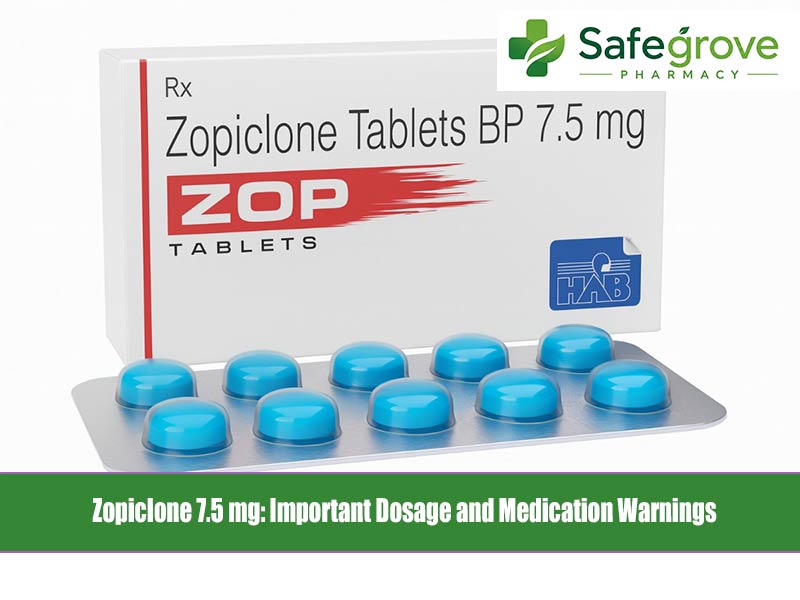
Zopiclone is available in the UK as white, film-coated tablets in two strengths: 3.75mg and 7.5mg. Prescribers always follow the principle of using the lowest effective dose for the shortest possible duration.
| Patient Group |
Standard Prescribed Dose |
Administration Timing |
Maximum Recommended Duration |
| Adults (18–64 years) |
7.5mg once daily |
Immediately before bedtime |
2 to 4 weeks (including tapering) |
| Older Adults (65+ years) |
3.75mg once daily |
Immediately before bedtime |
Up to 2 weeks (used with extreme caution) |
| Liver or Kidney Impairment |
3.75mg once daily |
Immediately before bedtime |
Short-term under close medical review |
| Chronic Respiratory Insufficiency |
3.75mg (if not contraindicated) |
Immediately before bedtime |
Strictly short-term; avoid in severe cases |
| Children & Adolescents (<18) |
Not recommended |
N/A |
Contraindicated (safety not established) |
Step-by-Step Instructions for Taking Zopiclone Safely
-
Prepare for Bed First: Complete all evening tasks, lock doors, and get into bed before swallowing your tablet. Do not take zopiclone while still active or socialising.
-
Swallow Whole: Swallow the tablet whole with a glass of water. Do not crush, split (unless scored and directed by a pharmacist), or chew the tablet, as this exposes the intensely bitter core.
-
Ensure an 8-Hour Sleep Window: Only take a dose if you have 7 to 8 hours available for uninterrupted sleep before needing to wake up.
-
Never Double Dose: If you forget to take zopiclone at bedtime, skip the missed dose entirely. Never take a tablet in the middle of the night or take two tablets the following evening.
Why Is Treatment Capped at 2 to 4 Weeks?
Your body adapts rapidly to Z-drugs. Within just 1 to 2 weeks of nightly use, pharmacological tolerance can develop, meaning the same dose becomes less effective at inducing sleep. Continuing beyond 4 weeks significantly increases the risk of physical and psychological dependence. For this reason, UK GPs rarely add zopiclone to automatic repeat prescription lists.
Side Effects of Zopiclone: What to Expect
Like all active medicines, zopiclone tablets can cause side effects, though not everyone experiences them.
Common Side Effects (Affecting up to 1 in 10 people)
-
Bitter or Metallic Taste (Dysgeusia): The hallmark side effect of zopiclone. Because zopiclone is excreted in saliva, many patients wake up with a distinct metallic or bitter taste. Sipping water or brushing your teeth helps, and it fades as the drug clears your system.
-
Dry Mouth (Xerostomia): Staying hydrated and maintaining thorough dental hygiene prevents dry-mouth-related tooth decay during short courses.
-
Next-Day Drowsiness: Feeling groggy, light-headed, or less alert the morning after taking a dose.
Serious Side Effects Requiring Urgent Medical Attention
Contact NHS 111 or your GP immediately if you experience:
-
Complex Sleep Behaviours: Sleepwalking, preparing or eating food, making phone calls, driving (“sleep-driving”), or having sex while not fully awake, with complete memory loss (anterograde amnesia) of the event the next morning.
-
Psychiatric or Behavioural Changes: Hallucinations, delusions, severe agitation, confusion, nightmares, or worsening depression and suicidal thoughts.
-
Respiratory Depression: Shallow, slow, or laboured breathing.
-
Severe Allergic Reaction (Anaphylaxis): Swelling of the lips, face, tongue, or throat, or a sudden itchy rash—call 999 immediately if this occurs.
Patients in the UK can also report suspected side effects directly to the MHRA via the Yellow Card Scheme.
Critical Safety Precautions and Contraindications
Before starting zopiclone tablets, inform your prescriber of your full medical history.
Who Should Not Take Zopiclone?
Zopiclone is contraindicated if you have:
-
Severe Sleep Apnoea Syndrome: Zopiclone relaxes airway muscles and suppresses respiratory drive, dangerously worsening breathing pauses during sleep.
-
Myasthenia Gravis: A neuromuscular condition causing severe muscle weakness.
-
Severe Liver Insufficiency: Impaired liver function prevents the body from clearing the drug, causing toxic accumulation.
-
Respiratory Failure or Severe Lung Disease: Acute breathing difficulties.
-
A History of Complex Sleep Behaviours: Any previous episode of sleepwalking or sleep-driving on Z-drugs.
Alcohol, Opioids, and Drug Interactions
Combining zopiclone with other central nervous system depressants can be life-threatening:
-
Alcohol: Strictly avoid alcohol while taking zopiclone. Alcohol amplifies sedation, increases the likelihood of sleepwalking and amnesia, and can suppress breathing to dangerous levels.
-
Opioid Painkillers: Taking zopiclone alongside codeine, tramadol, morphine, or oxycodone carries a severe risk of profound sedation, respiratory depression, coma, and death.
-
Other Medications: Inform your pharmacist if you take sedating antihistamines, antidepressants, antipsychotics, anti-epileptics, or certain antibiotics/antifungals (such as erythromycin or ketoconazole), which can slow down how quickly your liver breaks down zopiclone.
-
Caffeine: Avoid coffee, energy drinks, and tea in the afternoon and evening, as caffeine directly counteracts zopiclone’s sedative mechanism.
UK Driving Laws and the 12-Hour Rule
Under UK road traffic law, it is an offence to drive while impaired by any medication—even if it is legally prescribed. NHS guidance explicitly states that you must not drive, ride a bike, or operate heavy machinery for at least 12 hours after taking zopiclone. If you take a tablet at 11:00 PM, you are not safe to drive until 11:00 AM the following day. If you still feel drowsy or sluggish after 12 hours, continue to avoid driving until your alertness fully returns.
Pregnancy, Breastfeeding, and Co-Sleeping Warnings
Zopiclone is generally not recommended during pregnancy, particularly in the third trimester, as it can cause drowsiness, low muscle tone, or withdrawal symptoms in a newborn baby. Small amounts also pass into breast milk. Crucially, never co-sleep (share a bed) with your baby while taking zopiclone, as sedative medications significantly increase the risk of Sudden Infant Death Syndrome (SIDS).
Stopping Zopiclone Safely: Avoiding Rebound Insomnia
If you have taken zopiclone tablets every night for more than a week or two, do not stop taking them abruptly. Stopping suddenly can trigger withdrawal symptoms, including:
Your GP will guide you through a gradual dose reduction (tapering schedule)—such as stepping down from 7.5mg to 3.75mg, or spacing doses to every other night—while transitioning to long-term behavioural sleep strategies.
Frequently Asked Questions
1. How quickly do zopiclone tablets start working?
Zopiclone tablets typically begin working within 30 to 60 minutes of swallowing the dose. Because of its rapid onset, you should only take your tablet when you are already in bed and ready to sleep for a full 7 to 8 hours.
2. What is the difference between zopiclone 3.75mg and 7.5mg?
The 7.5mg tablet is the standard adult dose for short-term insomnia. The 3.75mg tablet is a half-strength dose prescribed for adults aged 65 and over, people with liver or kidney problems, or patients who experience excessive morning drowsiness on the higher dose.
3. Why does zopiclone leave a metallic taste in my mouth?
A bitter or metallic taste is the most common side effect of zopiclone. It occurs because small amounts of the medication are absorbed into your bloodstream and excreted through your salivary glands. The taste is harmless and disappears once the medicine leaves your body.
4. Can I drive the morning after taking a zopiclone tablet?
You must wait at least 12 hours after taking zopiclone before driving a car, riding a bicycle, or operating machinery. Even after 12 hours have passed, it is illegal to drive in the UK if you still feel dizzy, drowsy, or slow to react.
5. Can I drink alcohol while taking zopiclone?
No. You must strictly avoid alcohol while taking zopiclone. Both substances depress the central nervous system, and combining them can lead to dangerous oversedation, severe breathing difficulties, memory blackouts, and sleepwalking.
6. Are zopiclone tablets addictive?
Yes, zopiclone can cause both physical and psychological dependence if taken regularly for more than a few weeks. To prevent addiction and tolerance, UK doctors limit prescriptions to a maximum of 2 to 4 weeks at the lowest effective dose.
7. What should I do if I wake up in the middle of the night after taking zopiclone?
Do not take a second zopiclone tablet. Taking an extra dose in the same night risks overdose and severe next-day impairment. Instead, rest quietly in a dimly lit room until drowsiness returns, and speak to your GP if middle-of-the-night waking persists.
8. What happens if I accidentally take too much zopiclone?
Taking more than your prescribed dose of zopiclone can cause dangerously deep sleep, low blood pressure, loss of balance, shallow breathing, or coma. Call NHS 111 immediately for urgent advice, or call 999 for an ambulance if someone is struggling to breathe or cannot be woken.
9. Can I take paracetamol or ibuprofen with zopiclone?
Yes, standard over-the-counter painkillers like paracetamol and ibuprofen do not interact with zopiclone and are generally safe to take together. However, you must avoid combination painkillers containing codeine (such as co-codamol) unless specifically approved by your doctor, as opioids dangerously increase sedation.
10. How do I stop taking zopiclone without getting withdrawal symptoms?
If you have used zopiclone continuously for more than two weeks, consult your GP before stopping. Your doctor can create a gradual tapering plan—reducing your dose to 3.75mg or taking tablets only on intermittent nights—to prevent rebound insomnia, anxiety, and restlessness.