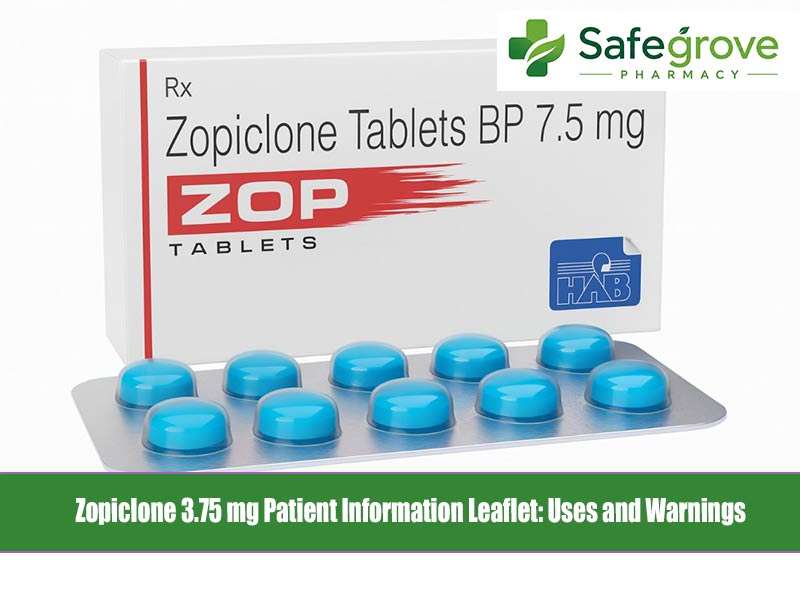
Unfolding the small printed paper insert inside a prescription medicine box can often feel like deciphering complex medical jargon. Whether you have misplaced your original paper leaflet, are supporting an older relative with their evening routine, or want clear clarity before starting a new prescription, understanding the zopiclone 3.75 pil is essential for your safety and peace of mind.
Across the United Kingdom—from bustling GP surgeries in London, Manchester, and Birmingham to community pharmacies in Edinburgh, Cardiff, and Belfast—zopiclone is prescribed strictly for the short-term management of debilitating insomnia. Because this medication acts directly on the central nervous system, knowing how to interpret your Patient Information Leaflet (PIL) ensures you take your dose correctly, avoid hazardous drug and alcohol interactions, and recognise important warning signs.
At Zopiclone Direct UK, we believe evidence-based, transparent healthcare communication empowers patients to make informed decisions alongside their doctor or pharmacist. Below is an in-depth, structured guide to navigating the zopiclone 3.75 mg PIL, alongside direct references to official UK healthcare resources.
What Does “PIL” Mean and Why Should You Read Your Specific Leaflet?
PIL stands for Patient Information Leaflet. Under UK regulatory standards overseen by the Medicines and Healthcare products Regulatory Agency (MHRA), every authorised prescription medicine dispensed in the UK must include an approved package leaflet inside its secondary packaging.
While online summaries offer helpful educational context, you should always review the exact paper leaflet supplied inside your own medicine carton. This practice is vital for several reasons:
-
Multiple UK Manufacturers: Generic zopiclone 3.75 mg film-coated tablets are produced by various pharmaceutical licence holders in the UK, including Accord Healthcare, Teva UK, and other approved manufacturers.
-
Excipient (Inactive Ingredient) Variations: While the active pharmaceutical ingredient remains identical, inactive binders, coatings, or lactose contents can vary between brands. Checking Section 6 of your specific leaflet is crucial if you manage food intolerances or allergies.
-
Up-to-Date Safety Advice: Regulatory safety warnings regarding driving restrictions, dependence risks, and concurrent sedatives are periodically updated. Newly dispensed packs contain the most current batch guidance.
Pharmacist Note: Before taking your first dose, always cross-reference three details on your outer carton and PIL: the medicine name (Zopiclone), the exact strength (3.75 mg), and the manufacturer’s name.
Where to Find Official Zopiclone 3.75 mg Leaflets Online
If your paper leaflet has been discarded or you require a digital, accessible version to view on a smartphone or desktop device, verified UK patient leaflets are available freely through official medical portals.
Note: The links below direct you to authoritative UK regulatory databases and are independent of Zopiclone Direct UK’s editorial commentary.
Structure of a Zopiclone 3.75 mg PIL: Section-by-Section Overview
UK patient leaflets follow a standardised six-section format mandated by health authorities. Knowing what each section contains allows you to find essential clinical facts quickly.
| PIL Section |
Official Heading |
Core Information Covered |
| Boxed Warning |
Dependence & Withdrawal Notice |
Highlights risks of tolerance, psychological dependence, and withdrawal if stopped abruptly. |
| Section 1 |
What Zopiclone is and what it is used for |
Details its classification as a cyclopyrrolone hypnotic (“Z-drug”) and its short-term sleep indication. |
| Section 2 |
What you need to know before you take Zopiclone |
Outlines contraindications, medical cautions, alcohol rules, driving limits, and drug interactions. |
| Section 3 |
How to take Zopiclone |
Provides exact bedtime dosing (3.75 mg vs 7.5 mg), treatment duration limits, and missed dose advice. |
| Section 4 |
Possible side effects |
Breaks down common, uncommon, and rare side effects, plus emergency allergic warning signs. |
| Section 5 |
How to store Zopiclone |
Details storage temperatures, child safety, expiry dates, and pharmacy disposal guidelines. |
| Section 6 |
Contents of the pack and other information |
Lists active ingredients, excipients, tablet appearance, and available pack sizes. |
Section 1: What Zopiclone 3.75 mg Is and What It Is Used For
In Section 1, the leaflet defines zopiclone as a prescription-only medicine belonging to a class of compounds known as cyclopyrrolones, commonly referred to as “Z-drugs”. It functions by enhancing gamma-aminobutyric acid (GABA)—a natural calming neurotransmitter in the brain—thereby slowing central nervous system activity to induce sleep.
According to UK clinical licensing, zopiclone 3.75 mg is indicated strictly for the short-term treatment of severe insomnia in adults, characterised by:
-
Difficulty falling asleep at bedtime (initial insomnia).
-
Frequent waking during the night.
-
Waking too early in the morning with an inability to return to sleep.
-
Severe sleep disruption causing profound daytime fatigue and distress.
Why is usage time restricted? The leaflet explicitly notes that zopiclone is intended for short-term use only (typically ranging from a few days up to a maximum of 2 to 4 weeks). Prolonged daily use diminishes effectiveness and heightens dependence risks.
Section 2: Warnings, Precautions, Alcohol, and Drug Interactions
Section 2 contains critical safety instructions that must be reviewed prior to ingestion. Key subsections include:
1. Contraindications (When NOT to Take Zopiclone)
You must not take zopiclone if you:
-
Have a known allergy to zopiclone or any inactive excipients listed in Section 6.
-
Suffer from myasthenia gravis (severe muscle weakness).
-
Have severe respiratory insufficiency or chronic breathing difficulties.
-
Have sleep apnoea syndrome (brief breathing cessations during sleep).
-
Have severe liver impairment.
-
Are under 18 years of age.
2. Important Medical Precautions
Consult your GP or pharmacist before taking zopiclone 3.75 mg if you have:
-
A history of alcohol, recreational drug, or prescription medicine misuse.
-
Depression, anxiety, or underlying mental health disorders.
-
Mild-to-moderate liver or kidney dysfunction, or chronic pulmonary conditions (common reasons for prescribing the reduced 3.75 mg starting dose).
3. Medicine Interactions
Combining zopiclone with other central nervous system depressants can cause dangerous over-sedation and respiratory depression. Essential interactions include:
-
Opioid Painkillers: Medicines such as codeine, tramadol, morphine, or co-codamol. Concomitant use increases risks of deep sedation, respiratory depression, coma, and fatality.
-
Other Sedatives & Psychotropics: Antipsychotics, anxiolytics, benzodiazepines, antiepileptic drugs, and sedating antihistamines.
-
Enzyme-Modifying Drugs: Macrolide antibiotics (e.g., erythromycin) and antifungals (e.g., ketoconazole) can increase zopiclone levels, amplifying drowsiness. Conversely, carbamazepine, rifampicin, and St John’s Wort can reduce its efficacy.
4. Alcohol, Driving, and Special Populations
-
Alcohol Prohibition: Do not consume alcohol while taking zopiclone. Alcohol severely intensifies sedative effects, heightening the risk of profound respiratory depression and memory blackouts.
-
Driving and Machinery (The 12-Hour Rule): Zopiclone impairs reaction times, coordination, and alertness the following morning. Official guidance dictates that you must not drive, ride a bicycle, or operate machinery for at least 12 hours after taking a dose, and only if you feel fully alert without residual drowsiness.
-
Pregnancy and Breastfeeding: Zopiclone is generally avoided during pregnancy and lactation. The NHS explicitly warns against co-sleeping with infants after taking sedatives due to increased risks of Sudden Infant Death Syndrome (SIDS).
Section 3: How to Take Zopiclone 3.75 mg Safely
Section 3 outlines precise dosage administration instructions. Never modify your dose without direct clinical supervision.
Why Start on 3.75 mg Instead of 7.5 mg?
While the standard adult dose is often 7.5 mg, UK clinical guidelines (BNF) and PILs recommend initiating treatment on the lower 3.75 mg dose for:
-
Older adults (aged 65 and over), who process sedatives more slowly, reducing fall risks and morning confusion.
-
Patients with mild-to-renal impairment, hepatic dysfunction, or chronic respiratory issues.
-
Individuals sensitive to sedative side effects.
Administration Guidelines
-
Bedtime Timing: Swallow the 3.75 mg tablet whole with water immediately before going to bed. Do not crush or chew.
-
Ensure 7 to 8 Hours Sleep: Only take zopiclone when you can remain in bed for a full 7 to 8 hours. Waking prematurely increases risks of transient amnesia and dizziness.
-
Single Dose Only: Never take a second dose during the same night.
-
Adhere to Prescribed Duration: Courses should be as short as possible, ranging from 2 days up to 4 weeks maximum.
-
Missed Doses: If you forget to take your tablet at bedtime, skip it entirely and wait until the following night. Never take a double dose.
-
Overdose Protocol: In suspected overdose cases, contact NHS 111 immediately or attend your nearest emergency department, bringing the medicine carton and PIL with you.
Understanding Dependence, Tolerance, and Withdrawal
Modern UK patient leaflets place strong emphasis on the risks associated with prolonged zopiclone usage:
-
Tolerance: Continuous nightly use over several weeks causes the body to adapt, rendering standard doses less effective.
-
Withdrawal and Rebound Insomnia: Stopping zopiclone abruptly after regular use can trigger rebound sleep difficulties (worse than baseline) alongside withdrawal symptoms such as anxiety, tremors, sweating, muscle aches, and irritability.
Safe Tapering: Always consult your GP before discontinuing treatment if you have taken zopiclone for more than a few days. Your prescriber will formulate a gradual tapering schedule to mitigate withdrawal discomfort.
Section 4: Possible Side Effects Explained
In Section 4, side effects are categorised by frequency:
Common Side Effects (Up to 1 in 10 People)
-
Bitter or Metallic Taste (Dysgeusia): A characteristic side effect caused by salivary secretion of the drug.
-
Dry Mouth: Easily managed with bedside water.
-
Next-Day Drowsiness: Residual sleepiness or sluggishness the following morning.
Uncommon and Rare Side Effects
-
Uncommon: Dizziness, headache, nausea, mild agitation, or nightmares.
-
Rare: Confusion, anterograde amnesia (memory gaps if sleep is interrupted), aggressive reactions, skin rashes, and reduced libido.
Serious Warning Signs (Seek Urgent Care)
Stop taking zopiclone and seek immediate medical assistance if you experience:
-
Signs of anaphylaxis or severe allergic reaction (facial/throat swelling, breathing difficulties).
-
Complex sleep behaviours (sleepwalking, preparing food, or sleep-driving with no memory of the event).
-
Severe psychiatric disturbances or hallucinations.
Note: Suspected side effects can be reported directly via the UK Yellow Card Scheme (yellowcard.mhra.gov.uk).
Sections 5 & 6: Storage, Disposal, and Composition
The final sections cover practical household management and product details:
-
Section 5 (Storage & Disposal): Store below 25°C in original packaging, strictly out of the reach of children. Return unused tablets to your community pharmacy for safe destruction; do not discard them via household waste or plumbing.
-
Section 6 (Contents): Confirms each tablet contains 3.75 mg of zopiclone alongside approved excipients (such as lactose monohydrate).
Why a PIL Is Not a Substitute for Professional Medical Advice
While the zopiclone 3.75 pil provides vital regulatory safety facts, it is designed as a general reference rather than personalised medical guidance. It cannot evaluate your unique health profile or concurrent prescriptions.
If you have questions regarding your leaflet or if insomnia persists, consult your GP or a GPhC-registered pharmacist. Zopiclone Direct UK supports UK patients in navigating safe medication practices alongside evidence-based sleep hygiene.
Frequently Asked Questions
1. What does PIL mean for zopiclone?
PIL stands for Patient Information Leaflet. It is the official, MHRA-approved instruction insert included in every UK medicine box, detailing uses, contraindications, dosage instructions, side effects, and safety warnings for zopiclone 3.75 mg tablets.
2. Where can I find the zopiclone 3.75 mg patient information leaflet online?
You can access verified digital UK PILs through the Electronic Medicines Compendium (emc) website (medicines.org.uk) or the MHRA Products portal (products.mhra.gov.uk) by searching for zopiclone 3.75 mg tablets and matching the manufacturer.
3. What key information does the zopiclone 3.75 mg PIL contain?
The leaflet contains six structured sections covering therapeutic uses, medical warnings, alcohol and driving restrictions, bedtime dosage instructions, side effects, storage guidelines, and active excipient ingredients.
4. Are the zopiclone 3.75 mg and 7.5 mg patient information leaflets the same?
Many UK manufacturers publish a combined leaflet for both strengths. While safety warnings and side effects are identical, Section 3 distinguishes the 3.75 mg starting dose (for older adults or those with organ impairment) from the standard 7.5 mg dose.
5. Can I drink alcohol if I am taking zopiclone 3.75 mg?
No. Both the official PIL and NHS guidelines strictly advise against consuming alcohol while taking zopiclone, as alcohol intensifies central nervous system depression and increases risks of dangerous respiratory sedation.
6. How long after taking zopiclone 3.75 mg can I safely drive?
Official UK guidance dictates that you must not drive, ride a bicycle, or operate machinery for at least 12 hours after taking zopiclone, and only if all residual morning drowsiness has completely passed.
7. Why does zopiclone leave a bitter or metallic taste in my mouth?
A bitter or metallic taste (dysgeusia) is a well-documented, common side effect caused by trace amounts of the drug secreted into saliva. It subsides naturally as the medicine clears from your body.
8. What should I do if I miss my bedtime dose of zopiclone 3.75 mg?
If you forget to take your tablet at bedtime, skip the dose entirely and take your next scheduled dose the following night. Never take a double dose or take zopiclone during the day.
9. Can I stop taking zopiclone 3.75 mg suddenly once my sleep improves?
If used for only a few days, stopping immediately is often acceptable. However, after regular use exceeding two weeks, stopping abruptly can cause rebound insomnia and withdrawal symptoms; consult your GP for a tapering schedule.
10. What should I do if I have questions about my zopiclone 3.75 mg leaflet?
If any warning or instruction in your leaflet is unclear, consult your GP or a GPhC-registered pharmacist before taking your next dose, or call NHS 111 for urgent guidance.